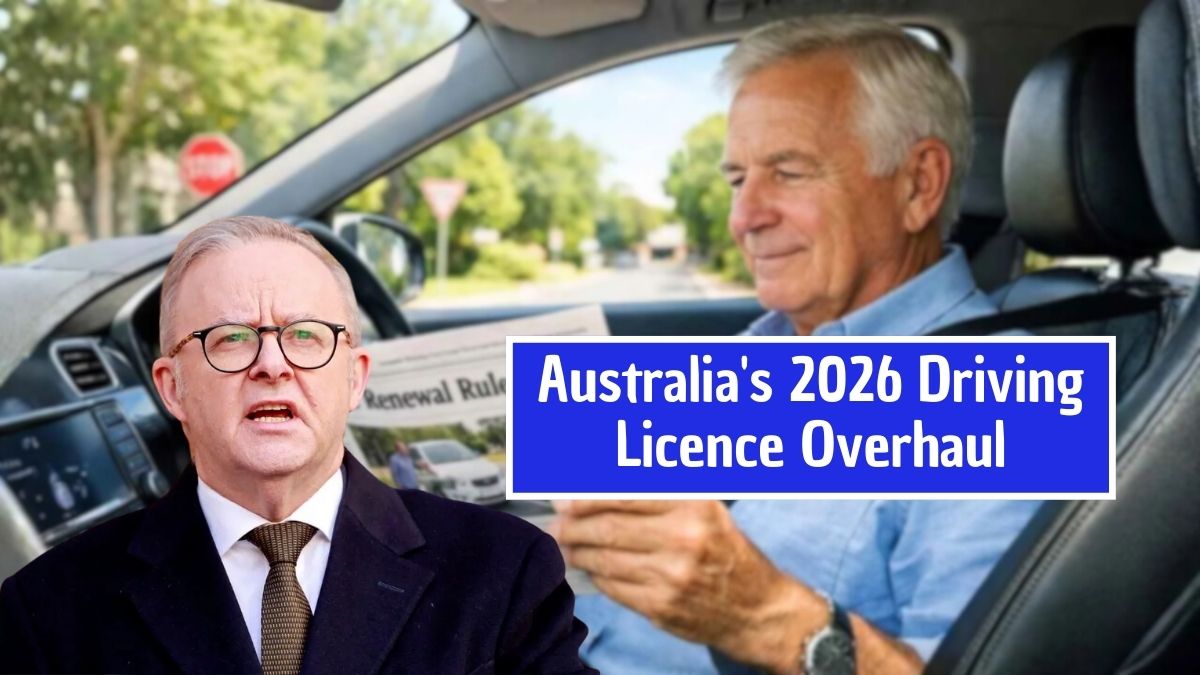
From January 2026, Australia will enforce major changes to driving licence regulations across every state and territory. These changes will affect drivers of all ages but especially senior drivers aged 70 and above, introducing tougher rules, shorter appeal periods, automatic licence cancellations, and stricter penalties for repeated offences. The updated regulations are part of a national effort to enhance road safety, modernise the licencing system, and reduce accidents caused by health-related impairments and distracted driving.
Stricter Penalties for Traffic Violations
Under the new reforms, repeat traffic offences will attract severe penalties, including automatic licence cancellation and reduced timeframes to appeal decisions. Common infractions like failing to give way or improper lane usage will now carry fines of $220. More severe offences, such as using a mobile phone while driving, will lead to heavier fines and possible licence suspension.
Mandatory Medical Assessments for Senior Drivers
To ensure safety on the roads, medical checkups will become compulsory for older drivers. The goal is to identify any health conditions that may impair driving ability, such as vision loss, cognitive decline, or physical limitations.
Key requirements include:
- From age 70: Medical fitness exams every two years.
- From age 75: Annual medical assessments.
- From age 80: Practical driving tests may be required in certain states.
Failure to comply with medical requirements can result in fines up to $550 or the refusal of licence renewal.
Conditional Licences for Safer Mobility
Australia’s new driving rules will allow for conditional licences, especially for senior drivers. These licences restrict driving to specific hours, certain geographic areas, or reduced speed zones. The aim is to balance independence with public safety.
Drivers deemed safe but requiring some limitations due to age or health can retain limited driving rights, such as:
- Daytime driving only
- Avoiding highways or high-speed zones
- Staying within their local communities
State-by-State Licence Rules for Senior Drivers
While the federal changes apply nationally, each state will implement certain unique conditions:
New South Wales (NSW)
- Modified licences from age 85
- Annual medical checks start at age 75
- Conditional driving options available for older drivers
Victoria
- No automatic checkups, but drivers must self-report medical conditions
- Responsibility lies with drivers to inform VicRoads of any health issues
Queensland
- Medical certificates valid for 13 months required from age 75
- Medical assessments must be updated annually
Western Australia
- Annual medical tests begin at age 80
- Practical driving assessments required based on risk profile
National Senior Licence Guidelines from January 2025
Australia will implement unified national rules for senior drivers beginning in January 2025, leading into full changes by January 2026. All drivers aged 65 and above must undergo a set of specific health assessments for licence renewals.
These assessments follow a three-pillar approach:
- Medical Evaluation: Assessment of general health, motor skills, and cognitive abilities by a GP.
- Vision Screening: Optometrists must confirm that the driver meets visual standards for depth perception and peripheral vision.
- On-Road Testing: Required only if recommended by doctors or if the driver has a history of performance concerns.
Driving Tests and Risk-Based Evaluations
While not all senior drivers will need to undergo road tests, some may be asked to complete a practical driving assessment if:
- Their doctor advises it
- They’ve had recent driving incidents
- They exhibit high-risk health concerns
These tests will help ensure only those fit to drive are allowed behind the wheel
Technology and Digital Licence Innovations
Australia’s 2026 reforms also include digital licence tracking, enabling easier updates, renewals, and compliance checks. This digital transition helps:
- Prevent fraud
- Improve accessibility for seniors
- Reduce paperwork and waiting times
- Support health updates via integrated systems
Refresher training and tutorials will also be made available to senior drivers to help them adapt to technology-based services.
Speed Zone Changes and Safer Driving Areas
To reduce road accidents, speed limits will be lowered in high-traffic zones, school zones, and pedestrian-dense areas. These changes come with increased monitoring through speed cameras, especially in urban centers.
New signage and updated road layouts will support these changes, making them easier for drivers—especially seniors—to follow.
Increased Road Safety and Enforcement Measures
Australia is intensifying its national road safety strategy, focusing on driver behaviour, vehicle safety, and road infrastructure improvements.
Some of the key safety measures include:
- Promotion of defensive driving courses
- Electronic Stability Control (ESC), ABS, and airbags as standard
- Strict enforcement of seatbelt laws
- Broad use of speed cameras
- Routine random breath testing (RBT)
- Zero tolerance on mobile phone use, except hands-free
- Ongoing efforts to reduce drunk driving and distracted driving
Graduated Licensing for New Drivers
Under the Graduated Licensing Scheme, new drivers must go through structured learning phases. This helps build road experience gradually and responsibly.
As part of broader reforms, digital tracking of learner progress and penalties may be implemented nationwide, creating a consistent learning journey for young drivers.
What This Means for All Drivers in Australia
The upcoming changes are not limited to senior drivers. All motorists must:
- Be aware of increased penalties for violations
- Prepare for more intensive licence renewal processes
- Adjust to speed limit reductions in key areas
- Expect stronger enforcement and surveillance of traffic rules
Summary of Key Changes Coming in 2026
| Area | Change |
|---|---|
| Senior Drivers | Mandatory health & vision checks, conditional licences |
| Licence Cancellation | Automatic for repeat offenders, shorter appeal window |
| Traffic Violations | Higher fines for lane misuse, phone use, failure to yield |
| Digital Licences | Nationwide adoption, easier renewals and updates |
| Speed Limits | Reduced in high-risk zones and near schools |
| Driving Tests | Required for high-risk senior drivers |